
The stories we never ask become the ones we miss the most.

My grandmother never told me stories. Not the ones I wish she’d told me, anyway. Every year, my father would take us to visit her in England. Without fail, she’d make jollof rice and chicken. To this day, it remains the best jollof I’ve ever tasted. Years later, I’d travel to Nigeria and eat Nigerian jollof. I’ve tasted Ghanaian jollof too. They were wonderful in their own right, but nothing ever came close to the one my grandmother made in her kitchen. Authentic jollof from Seirra Leone.
At the time, I thought I knew my grandmother. Looking back, I realise I only knew the version of her that existed after England. I never asked what her childhood looked like. I never asked what games she played as a little girl. I never asked what Sierra Leone smelled like after the rain, or what songs her mother sang to her before bed. I thought there would always be another visit.
I was born and raised in London, England. Like many children of immigrant families, identity was something I understood through forms and tick boxes. Whenever I was asked my ethnicity, I ticked Black British. It seemed obvious. Britain was the only home I’d ever known. As I grew older, that answer no longer felt complete. I began writing Black British Caribbean instead. There was never a box for it, so I’d tick “Other” and write it in myself.
My mother’s family is Jamaican. My father’s family is Trinidadian and Sierra Leonean. Jamaican culture surrounded my childhood. Sundays smelled of Jamaican cooking. Reggae played through the house. My grandmother on my mother’s side laughed every time I tried speaking patois, reminding me that I sounded more “Jafakecan” than Jamaican. Jamaica wasn’t something I had to search for. It lived in our home.
My father’s mother, however, was born and raised in Sierra Leone before moving to England as a young woman. We visited her every year, sometimes twice. She loved us deeply. We loved her deeply. Yet somehow, I never thought to ask about the life she had lived before she became “Grandma.” She never spoke much about Sierra Leone. Looking back, I sometimes wonder if leaving meant leaving behind memories she no longer wanted to revisit. Perhaps life there had been difficult. Perhaps England represented a fresh start.
I’ll never know. Because I never asked.
For most of my life, I never considered myself African. African blood ran through my veins, yet it never found its way into my identity. Africa felt distant. I had African friends growing up, but I always connected more naturally with my Caribbean friends. I even travelled to Nigeria in 2010, yet I returned home feeling no different. Africa was somewhere I visited, not somewhere I belonged.
Then, in 2024, my grandmother died. And grief did something I never expected. It introduced me to a woman I had loved all my life. Suddenly, I realised how little I knew about her. Not because she hadn’t loved me. But because I had never asked. I found myself grieving not only my grandmother, but every conversation we would never have.
What was her childhood like?
What dreams did she carry?
What made her leave Sierra Leone?
What did she miss most?
What pieces of herself did she leave behind?
Questions that had never crossed my mind suddenly became the ones I wanted answered most. For the first time in my life, West Africa no longer felt distant. Not because I suddenly understood everything about it. Not because I had travelled there. But because it was my grandmother’s home. And if it was her home, then in some quiet, undeniable way, it was part of mine too.
Since she passed, something has shifted inside me. I’ve wanted to read more. Learn more. Visit Sierra Leone. Not as a tourist searching for beautiful photographs, but as a granddaughter searching for the woman she wishes she’d known more deeply. Even the choices I make now seem connected to her.
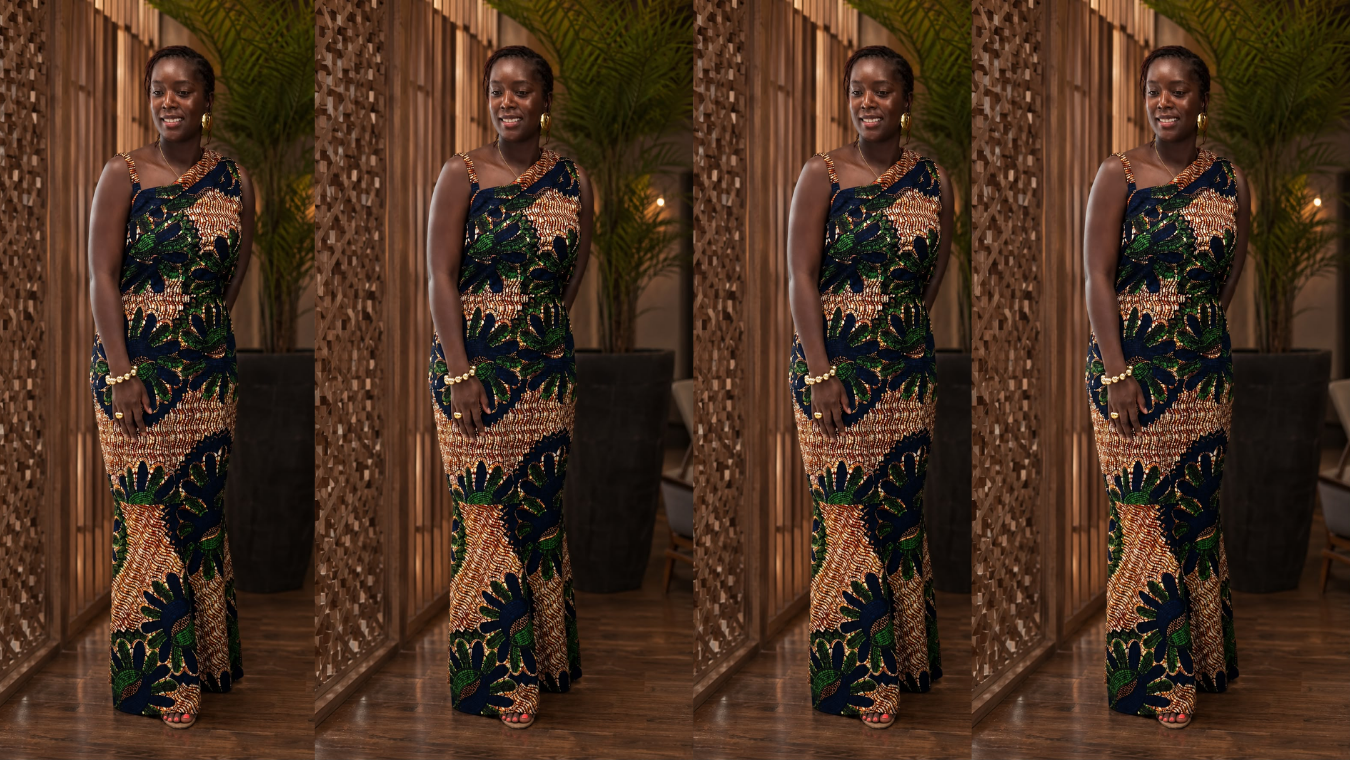
Last year, I began my microloc journey. My grandmother wore long, beautiful microlocs that flowed down her back. I hadn’t realised how much that image had stayed with me until I found myself sitting in a stylist’s chair asking for my own. Recently, I had a dress made using African print. When I chose the fabric, I couldn’t explain why I was drawn to it. Looking back, I wonder if somewhere in my memory I recognised something from my grandmother’s wardrobe. Perhaps the colours. Perhaps the patterns. Perhaps it was simply her. When I looked at the finished photograph, I cried. Not because I saw myself. Because I saw my grandmother. I imagined her before England. Before motherhood. Before migration. As a young woman walking through Sierra Leone with dreams I will never know.
For the first time, wearing African print didn’t feel like wearing someone else’s culture. It felt like recognising a part of my own story.
As I’ve reflected on my own journey, I’ve noticed more Caribbean women embracing natural hair, African prints, ancestry research and cultural traditions once kept at a distance. I don’t believe it’s simply fashion. I think it’s remembrance.
For generations, many of us inherited stories about Africa that centred on poverty, war and hardship. Rarely did we hear about its beauty, its richness or the ordinary lives lived there before migration. Perhaps that’s why so many of us grew up feeling disconnected from a place that had always been part of us.
Today, that seems to be changing. Not because we’re rejecting the Caribbean. Never that. The Caribbean is home. Its rhythms, its resilience and its cultures are woven into who we are. But embracing Africa doesn’t take anything away from our Caribbean identity. It helps us understand it more fully.
If one day I have a daughter and she asks why it’s important to know where her family comes from, I hope I’ll tell her this:
Know every part of your story. Know the island that shaped your family. Know the continent that shaped your history. Know the people whose sacrifices made your life possible. Because every branch of your family tree has helped make you who you are.
For a long time, I thought The Return meant going somewhere. Now I understand it differently. The Return is not about going back. It’s about embracing what has always been a part of you. Sometimes that return begins with a place. Sometimes it begins with a photograph.
Mine began with the loss of a grandmother whose story I never fully knew, and with the quiet hope that, by discovering more about where she came from, I might discover a little more about myself.
“It’s Not Always That Deep: In Defence Of Casual Friendships & Acquaintances” was created for Black Ballad members, but you can have access to three stories a month, including this one, by signing up for free!
Signing up to free access comes with mandatory inclusion to Black Ballad’s free weekly newsletter list & marketing updates.