
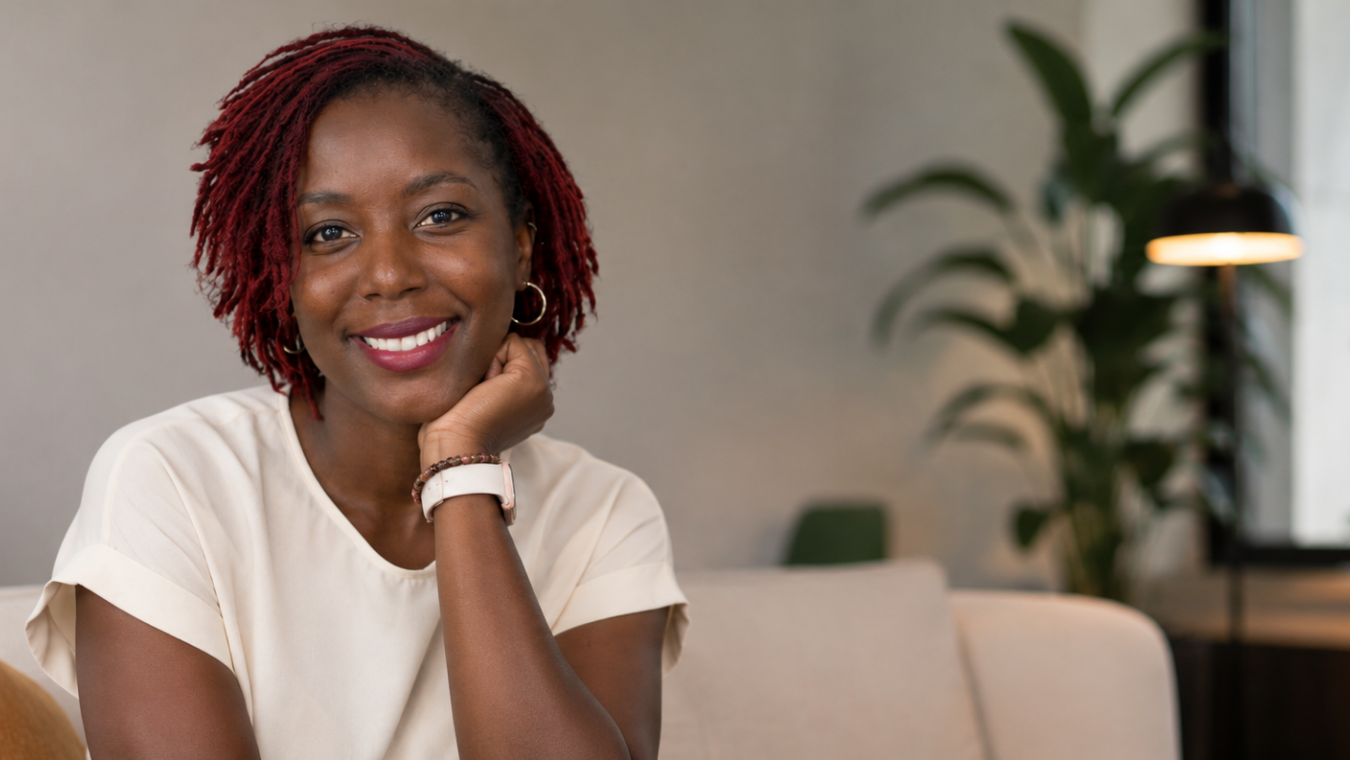
Growing up in the UK as a Black Caribbean woman came with its own set of quiet messages. That we weren’t the standard of beauty.
I was raised in the UK by Caribbean parents — Jamaican and Trinidadian — and for a long time, I didn’t realise how much of me was shaped by that. It wasn’t something we sat down and discussed. It was just… life. It was the food — oxtail with rice and peas, cooked like it was second nature. It was the sayings — “stop crying before I give you something to cry about.” It was Saturday mornings — cleaning before anything else could begin. It was discipline. Structure. Faith. Survival. That was my identity. And yet, growing up, I felt very British.
My friends were British. My environment was British. And somewhere along the way, I became very quick to dismiss my Caribbean heritage — almost like it was something to quiet down rather than lean into. It wasn’t until I was around 18 that something shifted. I found myself surrounded by other Caribbean girls — and for the first time, I felt a different kind of understanding. A familiarity I couldn’t quite explain, but deeply recognised. That’s when I realised:
I’m not just British… I’m Caribbean too.
But even then, there was a gap. I hadn’t been to the Caribbean. Not once. Not to Jamaica. Not to Trinidad. The first time I stepped into the region was at 25 — and not even to the places my parents called home, but to Barbados. Before that, my understanding of the Caribbean was inherited — not experienced. And there’s a difference.
Growing up in the UK as a Black Caribbean woman came with its own set of quiet messages. That we weren’t the standard of beauty. That our hair had to be straight to be “acceptable.” That there was only so far we could go — especially in corporate spaces. So I learned to navigate. To adjust. To present in ways that felt more acceptable. Until one day, I realised — I didn’t need to shrink. My hair was good enough. My identity was valid. I had every right to take up space.
Then life shifted again — this time through love. I met my husband in Barbados, and that connection led me to Saint Kitts and Nevis. And just like that, I wasn’t visiting the Caribbean anymore. I was living in it. I remember thinking: I’m living in paradise. And at the same time: I miss my family. Both things existed together.
Living here has been different. The heat isn’t holiday heat — it’s constant, present, grounding. The pace of life is slower — intentionally so. I had to learn to “rush slowly.” Everything closes earlier. Nothing is on demand in the way I was used to. And beyond the practical adjustments… there was something deeper. Identity. I didn’t expect to question myself here. But I did. There were moments — and still are — where I’ve felt like I don’t fully belong. Like I’m not “Caribbean enough” to claim the space I’m in. That feeling of unworthiness… of being an outsider… it doesn’t disappear overnight. I’m still finding my feet.
Home, for me now, is no longer one place. It’s a blend. A merging of London and the Caribbean. Of who I was… and who I’m becoming. And somewhere in the middle of all of this — Cocoa & Coconut was born. Not from perfection. Not from having everything figured out. But from a need. A need for ordinary Caribbean women — across the diaspora and at home — to have a space where they can speak, be seen, and be heard. Unapologetically. This is for the mother raising her children. The entrepreneur trying to break through. The grandmother with recipes and stories that deserve to live on. This is for women — by women.
Because for so long, so many of us have existed in the in-between. Too Caribbean for one space. Not Caribbean enough for another. Too much. Or not enough.
So let me say this clearly:
You are enough.
Your story is enough.
Your voice is enough.
And it deserves to be documented. This digital magazine exists because… we deserve to be seen. Fully. Softly. Honestly.
“Founder’s Letter: How Often Do We Ask Ourselves The Questions We’d Rather Avoid?” was created for Black Ballad members, but you can have access to three stories a month, including this one, by signing up for free!
Signing up to free access comes with mandatory inclusion to Black Ballad’s free weekly newsletter list & marketing updates.