
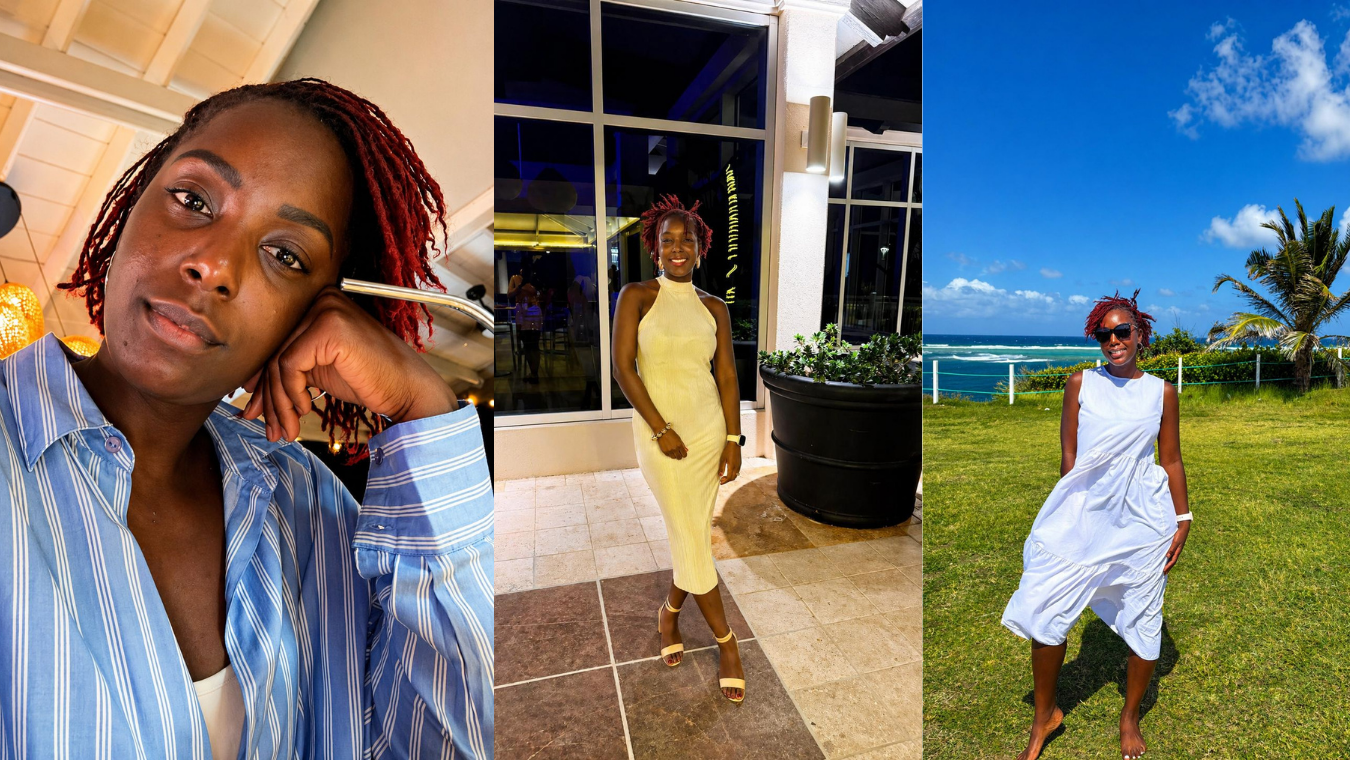
She was created during seasons where there was no room to pause. No room to fall apart. No room to soften.

For a long time, survival looked like strength to me.
It looked like being dependable.
Being resilient.
Being the person who could carry pressure without falling apart.
It looked like adapting quickly.
Pushing through exhaustion.
Handling things quietly.
Continuing to perform even when I was emotionally drained.
And for years, I believed that version of me was the version I should aspire to be.
But lately, I’ve started realising something uncomfortable:
The version of me that survived isn’t necessarily the version of me I want to become.
That version was built out of necessity.
She was created during seasons where there was no room to pause. No room to fall apart. No room to soften. She learned how to stay productive while overwhelmed. How to keep functioning while anxious. How to continue achieving while disconnected from herself.
And honestly?
I’m grateful to her.
She got me through difficult transitions.
She helped me build a career.
She protected me.
She kept me moving when life demanded resilience.
But survival versions of ourselves are often rooted in fear.
Fear of failure.
Fear of instability.
Fear of disappointing people.
Fear of not being enough unless we were constantly producing, achieving, helping, fixing, proving.
So we become hyper-independent.
Hyper-productive.
Hyper-aware.
Always anticipating.
Always carrying.
Always pushing.
Especially as women, many of us were praised for how much we could endure.
People admired our strength, but rarely questioned the cost of it.
And I think something shifts in your thirties when you begin asking:
What parts of me were survival mechanisms… and what parts are actually me?
That question has been sitting heavily with me lately.
Because while I’ve built resilience, I’ve also built exhaustion.
While I’ve mastered professionalism, I’ve also normalised emotional suppression.
While I’ve learned how to survive high-pressure environments, I’ve also struggled to fully rest inside them.
The older I get, the less interested I am in constantly proving how much I can carry.
I don’t want to build an identity around burnout anymore.
I don’t want my entire worth to be connected to productivity.
I don’t want to romanticise stress.
I don’t want to keep glorifying the version of myself that could endure anything while quietly neglecting herself in the process.
I think millennials are reaching a collective turning point around this.
Many of us were raised by people who survived difficult circumstances. Survival was practical. Necessary. Sometimes unavoidable. So naturally, we inherited certain ways of thinking:
Work hard.
Push through.
Don’t complain.
Be grateful.
Keep going.
And while those lessons helped us survive, they didn’t always teach us how to live softly.
They didn’t teach us how to rest without guilt.
How to slow down without anxiety.
How to exist without constantly earning our worth through labour.
So now, many of us are trying to unlearn survival mode while still functioning inside systems that reward it.
That tension is exhausting.
Because healing doesn’t happen overnight.
Softness doesn’t appear instantly.
You can intellectually know you deserve rest while your nervous system still panics when you slow down.
I know that feeling well.
Sometimes I still feel guilty for resting.
Guilty for wanting flexibility.
Guilty for dreaming about a slower life.
Guilty for not wanting my career to consume me entirely.
But I’m beginning to understand that healing often looks like rebuilding your identity beyond survival.
And that process is deeply uncomfortable.
Because when survival mode has shaped you for years, softness can initially feel unsafe.
Rest feels unfamiliar.
Stillness feels unproductive.
Joy feels undeserved unless you’ve exhausted yourself first.
Yet despite all of that, I can feel myself changing.
Slowly.
I can feel myself wanting a different kind of life.
A life rooted not only in achievement, but in alignment.
A life with creativity, flexibility, peace, and room to breathe.
A life where I am not constantly abandoning myself in order to appear successful.
And maybe that’s the real work many of us are doing right now.
Not becoming completely different people.
But becoming people who no longer need survival mode to feel valuable.
People who can still be ambitious without destroying themselves.
People who can still work hard without worshipping exhaustion.
People who can choose softness without feeling weak.
I think healing begins the moment you stop glorifying the version of yourself that survived everything and start asking whether she ever truly felt safe, rested, or free.
Because survival is important.
But eventually, you deserve more than survival.
You deserve a life that actually feels like living.
“Founder’s Letter: Why Being A Redhead In This Season Of Life Feels Right” was created for Black Ballad members, but you can have access to three stories a month, including this one, by signing up for free!
Signing up to free access comes with mandatory inclusion to Black Ballad’s free weekly newsletter list & marketing updates.